One-Line Art of Justice Balance Scales Review
As a designer who spends more time staring at stitch simulations than I do sleeping, I approach every new digital embroidery file with a healthy dose of skepticism. We have all been there: you buy a beautiful graphic online, load it into your software, and realize the line weights are too thin for satin stitch or the density is going to turn your fabric into cardboard. That is why I was particularly interested in putting the One-Line Art of Justice Balance Scales through its paces. This isn't just about whether the image looks good on a screen; it is about whether it survives the needle and thread treatment while maintaining its artistic integrity.
The First Impression: Minimalism Meets Symbolism
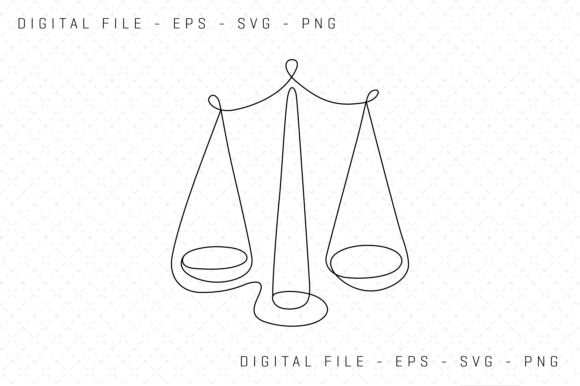
When I first opened the files included in the ZIP folder—specifically the SVG Design and the High Resolution Transparent PNG—the immediate takeaway was the elegance of the continuous line style. In the world of Illustrations and Graphics, one-line art is trending heavily because it feels modern, clean, and sophisticated. However, translating a continuous line drawing into a machine embroidery design requires careful consideration of how the thread will travel.
The mood this design creates is serious yet balanced, fitting perfectly for legal professionals, law students, or anyone advocating for fairness. Visually, the layout is centered and symmetrical, which is crucial for embroidery. Asymmetrical designs can sometimes feel "off" when stitched if the tension isn't perfect, but the inherent balance of these scales lends itself well to the medium. The lack of excessive detail means there are no tiny, fragile corners that are likely to fray after the first wash, a common pitfall in complex applique design work.
Real-World Application: The Boutique Tote Project
To truly test the viability of this asset, I imagined a specific real-life scenario: creating a custom order for a local law firm's end-of-year client gifts. The brief was simple: high-quality, professional, and understated. I decided to visualize this One-Line Art of Justice Balance Scales on a heavy canvas tote bag design.
In this context, the design shines. Because it is a single-weight line concept, it avoids the bulkiness that often plagues sweatshirt embroidery or thick outerwear. If I were to digitize this myself (or check the existing digitization if it comes pre-digitized), I would lean towards a fine running stitch or a very narrow satin stitch to maintain that "drawn" aesthetic. On a textured canvas tote, a running stitch would sink slightly into the weave, giving it a subtle, premium look that screams "handmade product" rather than mass-produced merchandise.
For an Etsy seller or craft business owner, this versatility is gold. You aren't limited to just bags. Imagine this stitched in white thread on a navy blue blazer pocket, or perhaps in gold metallic thread on a black velvet pillow cover for a home office. The simplicity allows the thread colors to do the heavy lifting. A monochromatic look offers professionalism, while a contrasting color adds a pop of personality suitable for a personalized gift.
Navigating Fabric Textures and Hoop Constraints
While the design is robust, there are areas where caution is necessary. If you are planning to use this on stretchy fabrics like a thin cotton t-shirt or a baby onesie for baby embroidery, the stitch density becomes critical. Even a single line can cause puckering if the tension is too tight or if the stabilizer isn't up to the task. For these lighter materials, I strongly advise using a cut-away stabilizer rather than tear-away. The continuous nature of the line means any distortion in the fabric will be immediately visible as a wobble in the scale's beam.
Furthermore, consider your hoop size. While this design is likely scalable, shrinking it too much for a small cap or a child's pocket might lose the definition of the pans on the scales. If the line becomes too thin relative to the stitch length, the machine might skip stitches, breaking the "one-line" illusion. Always run a test on scrap fabric of the same weight before committing to the final finished product. This is especially true for curved surfaces like caps, where the geometry of the design can get distorted if not properly punched or positioned.
Commercial Viability and Brand Consistency
For those of us selling design assets or finished goods, consistency is key to building customer trust. The One-Line Art of Justice Balance Scales offers a level of polish that elevates brand perception. Unlike clipart that looks pixelated when enlarged, the vector-based Editable EPS File and SVG formats ensure that whether you are making a massive banner or a tiny embroidered patch, the lines remain crisp.
This design fits seamlessly into a broader collection of commercial embroidery projects. It works exceptionally well for holiday embroidery gifts for judges or lawyers, or as part of a graduation series for law school completions. The visual appeal lies in its restraint; it doesn't shout for attention, which often makes it more desirable for professional apparel. When a customer sees a clean, well-executed line design, they perceive higher value. It suggests that the maker cares about aesthetics and precision, two traits that drive buyer engagement in crowded marketplaces.
Practical Notes for the Embroiderer
Before you start stitching, here are a few technical reminders based on my experience with similar Graphics:
- Check the License: The product description mentions usage for vinyl decals and stickers. Always confirm if the license extends to physical goods sold commercially if you are an Etsy seller. Do not assume digital rights equal physical resale rights without verification.
- Contrast is King: Test your design in black and white mockups first. Since this is a line art piece, it relies entirely on contrast. Ensure your thread color stands out sufficiently against the fabric texture.
- Digitizing Adjustments: If you are converting the SVG yourself, pay attention to the underlay. A proper underlay stitch will anchor that single line and prevent it from looking raised and loose on soft fabrics.
- Wash Testing: Projects that undergo frequent washing, like kitchen towels or aprons, need secure lock stitches at the start and end of the line to prevent unraveling.
In conclusion, the One-Line Art of Justice Balance Scales is a versatile, high-potential asset for the modern maker. It bridges the gap between digital illustration and tactile textile art beautifully. Whether you are decorating a custom apparel line, creating printable mockup previews for your shop, or crafting a heartfelt gift, this design holds up under scrutiny. Just remember that the magic happens in the execution: choose your fabric wisely, respect the limitations of the needle, and let the simplicity of the design speak for itself.