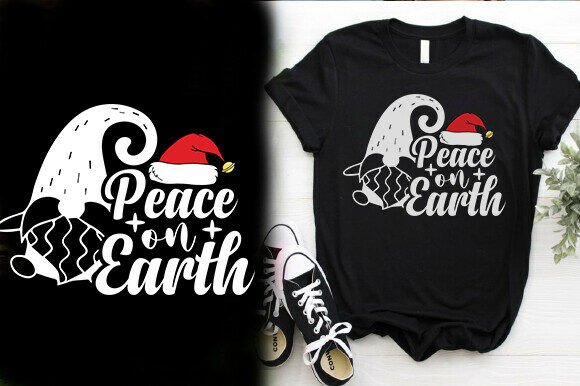
Reviewing the Peace on Earth Vector for Holiday Embroidery
As a designer who spends more time staring at stitch simulations than actual holiday decorations, I approach every new machine embroidery design with a mix of excitement and skepticism. When I first pulled up the PEACE on EARTH VECTOR TSHIRT DESIGN, my initial reaction wasn't about whether it was "cute"—it was about whether it would actually hold up under the needle. We see countless graphics marketed as ready-to-stitch, but there is often a massive gap between a vector file meant for screen printing and a functional embroidery file that respects the physics of thread and fabric.
This review breaks down how this specific graphic translates from a digital asset into a tangible, stitched reality, specifically for those of us running small shops or crafting personalized gifts during the busy holiday season.
First Impressions: Mood and Layout Potential
The visual personality of the PEACE on EARTH VECTOR TSHIRT DESIGN leans heavily into that classic, nostalgic Christmas vibe. It's not overly cluttered, which is immediately promising. In embroidery, less is often more, especially when dealing with text-heavy concepts. The layout suggests a strong central focus, likely featuring bold typography paired with traditional holiday iconography.
For a crafter or Etsy seller, this mood is versatile. It doesn't scream "novelty gift" in a cheap way; instead, it feels like something that could sit comfortably on a boutique sweatshirt or a high-quality linen tote. The spacing appears generous enough to allow for proper stitch definition without the elements bleeding into each other, a common failure point in poorly converted vector graphics.
Real-World Application: From Screen to Stitch
To truly test the viability of this design, I imagined a specific scenario: preparing a custom order for a local boutique needing a run of matching family sweatshirts. This is where the PEACE on EARTH VECTOR TSHIRT DESIGN faces its first real hurdle. While the product description highlights its use for POD sites like Amazon and Teespring, my interest lies in its physical application.
If you are planning to use this for sweatshirt embroidery, the design's scale is crucial. On a heavyweight fleece, you need a design large enough to showcase the details but not so dense that it creates a stiff, cardboard-like patch on the chest. Assuming the vector paths are clean, this design should translate well into a combination of fill stitch for larger graphical elements and satin stitch for the lettering. The contrast between these stitch types adds texture and perceived value to the finished product.
Beyond apparel, I can see this working beautifully as an embroidered patch. Creating a standalone patch allows you to bypass some of the fabric limitations of direct stitching. You could hoop a sturdy twill, stitch the design out, and then apply it to everything from denim jackets to canvas tote bag designs. This flexibility makes it a strong candidate for diversifying your craft business inventory without needing multiple digitized versions of the same art.
Navigating Fabric Challenges and Technical Constraints
However, we must address the technical realities. Not every surface is created equal. If you intend to place this on a curved surface like a cap, you need to be extremely cautious. Text-heavy designs often distort on the front panel of a hat unless the digitizing accounts for the curve. Without seeing the specific stitch file, I cannot guarantee it is pre-punched for caps, so I would advise testing on a scrap piece of similar structured fabric first.
Similarly, consider the fabric texture. If you are aiming for a rustic look using a slub linen or a textured knit, fine details in the vector might get lost. The stitch density becomes a critical factor here. If the original vector conversion results in too many stitches per square inch, the fabric will pucker, ruining the "Peace on Earth" message with wrinkled distortion. Conversely, if the density is too low, the backing fabric might show through, looking unprofessional.
For baby embroidery projects, such as a onesie or a nursery pillow cover, softness is paramount. A dense, heavy design can be irritating against sensitive skin. In this case, you might need to adjust the underlay or reduce the fill density if your software allows, ensuring the handmade product remains comfortable.
Commercial Viability and Brand Consistency
One of the strongest selling points mentioned in the product details is the "100 Copy Right Free" status. For commercial embroidery professionals, this is gold. It means you can confidently use this asset for client work, from corporate holiday gifts to limited-edition boutique drops, without fearing legal repercussions.
When building a brand, consistency is key. Using a cohesive set of design assets helps customers recognize your work. If the PEACE on EARTH VECTOR TSHIRT DESIGN fits your existing aesthetic—perhaps you specialize in vintage-inspired or minimalist holiday goods—it becomes a seamless addition to your catalog. It enhances buyer engagement because it looks intentional rather than generic.
Furthermore, the adaptability of this graphic for printable mockups cannot be overstated. Even before you stitch a single thread, you can create compelling marketing images for your online shop. Showing the design on various backgrounds helps customers visualize the personalized gift potential, driving sales before you've even turned on the machine.
Practical Notes for the Serious Maker
Before committing to a production run, here are my non-negotiable steps for evaluating a design like this:
- Test on Scrap Fabric: Never stitch directly on the final garment. Use a remnant of the exact same material to check for puckering and registration issues.
- Check Thread Contrast: Ensure your chosen thread colors pop against the fabric. A dark thread on a dark garment might look sophisticated in theory but unreadable in practice.
- Review Stabilizer Needs: Depending on the stretch of your material, you may need a cut-away stabilizer rather than tear-away to maintain the shape of the design over time.
- Inspect Small Details: Look closely at the tiny corners of the letters or graphical elements. These are the first places to break or fray if the stitch count is too low.
- Verify Licensing: While the description states it is copyright-free, always double-check the specific license terms regarding resale of the digital file itself versus the physical stitched item.
Ultimately, the PEACE on EARTH VECTOR TSHIRT DESIGN offers a solid foundation for holiday creativity. It bridges the gap between digital convenience and tactile craftsmanship. Whether you are an apparel decorator looking to expand your seasonal offerings or a hobbyist making gifts for family, this design holds promise. However, its success relies entirely on your execution. Treat the vector as a starting point, not a finished solution. Adjust your tension, choose your stabilizer wisely, and respect the limitations of your hoop size.
In the world of handmade goods, the difference between a good product and a great one often comes down to these small, thoughtful adjustments. By approaching this design with a critical eye and a practical mindset, you can transform a simple graphic into a cherished keepsake that truly embodies the spirit of the season.