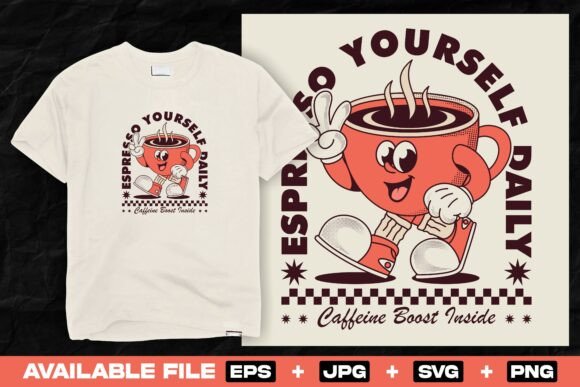
Retro Cartoon Coffee Cup Design Review
As a designer who spends more time staring at stitch simulations than actual coffee, I know that not every digital embroidery file translates well from screen to fabric. When I first encountered the Retro Cartoon Coffee Cup T Shirt Design, my initial reaction was one of nostalgic curiosity. The playful vintage style immediately caught my eye, promising a fun, approachable aesthetic that fits perfectly into the current trend of 70s and 80s revival graphics. However, as an experienced reviewer, I look past the cute factor to determine if this asset can actually hold up under the needle for real-world projects.
First Impressions: Mood and Visual Personality
The charm of this design lies in its simplicity and character. It isn't just a generic mug; it has personality. The lines are clean, and the "retro" vibe suggests bold outlines and potentially limited color palettes, which is excellent news for embroidery. In the world of machine embroidery design, complex gradients often turn into muddy messes, but a cartoon style with distinct shapes usually results in crisp, clear stitching. The layout feels balanced, suggesting it was created with versatility in mind. Whether you are aiming for a whimsical handmade product or a polished item for your boutique, the visual personality here screams "morning comfort" and "creative energy."
For those of us selling T-Shirt Designs or Graphics as part of a broader catalog, this specific illustration bridges the gap between digital print and physical texture. It has the kind of visual weight that demands to be touched, making it an ideal candidate for items where tactile appeal drives sales.
Real-World Application: From Screen to Stitch
To truly test the viability of the Retro Cartoon Coffee Cup T Shirt Design, I imagined a specific scenario: a custom order for a local café looking for staff aprons and a limited run of tote bags for their loyalty program. This is a common request for Etsy sellers and craft business owners. The goal was to create something durable enough for daily wear but stylish enough to serve as walking advertising.
In this context, the design shines. On a canvas tote bag design, the retro character would likely be executed using a combination of satin stitch for the bold outlines and a tight fill stitch for the body of the cup. The playful nature of the character softens the industrial look of the apron, making the staff appear approachable. For a sweatshirt embroidery project, perhaps for a "Coffee Club" merchandise drop, the design's thick lines would stand out beautifully against fleece or French terry fabric. The lack of overly intricate details means less risk of thread breaks or puckering, which is crucial when producing batches for a small shop product line.
I also considered its use as an embroidered patch. Given the self-contained shape of the coffee cup character, it would make a fantastic iron-on or sew-on patch. Patches are high-margin items for creative entrepreneurs, and this design's clear silhouette ensures it remains recognizable even at smaller sizes. If you are creating personalized gifts for a barista friend or a holiday embroidery gift for a caffeine addict, this design offers immediate recognition and emotional connection.
Technical Considerations and Fabric Compatibility
While the design is promising, practical application requires caution. Not all fabrics play nice with every graphic. Because this is originally marketed as a T-Shirt Design, we must consider how it behaves on knits versus wovens. On stretchy fabrics like jersey tees, a dense design can cause tunneling or distortion. If you plan to use this on a custom apparel item made of thin material, I strongly advise using a high-quality cut-away stabilizer rather than tear-away. This ensures the finished product maintains its shape after multiple washes.
Texture is another factor. If you are stitching this onto a textured towel or a rough linen pillow cover, the stitch density needs to be sufficient to cover the fabric weave without sinking in. Conversely, on smooth performance fabrics, you might need to adjust the pull compensation to prevent gaps in the running stitch areas. Since the original description notes it is "easy to modify," this is your cue to open the file in your editing software. Check the thread colors; retro palettes often use muted tones that might get lost on dark fabrics. You may need to swap a cream fill for a brighter white or add a backing layer if stitching on black garments.
Curved surfaces present their own challenges. If you intend to place this on a cap, remember that the center of the design must align perfectly with the seam. The width of the coffee cup illustration must fit within your available hoop size. Do not assume it fits a standard 4x4 hoop without checking the dimensions first. For baby embroidery projects, ensure there are no tiny, loose elements that could pose a safety hazard, though the cartoon style generally avoids this issue.
Enhancing Brand Value and Customer Trust
Using a cohesive design like the Retro Cartoon Coffee Cup T Shirt Design can significantly boost your brand consistency. For apparel decorators and digital product sellers, offering a unified theme across different products—mugs, shirts, bags—creates a professional image. Customers trust brands that pay attention to detail. A cleanly stitched logo or character implies quality craftsmanship, whereas a poorly digitized or ill-chosen design can cheapen the perceived value of your commercial embroidery work.
This design's "playful vintage" mood is particularly effective for engagement. It invites conversation. A customer seeing this on a kitchen towel or a nursery decor item is more likely to snap a photo and share it, providing free marketing for your craft fair products. It transforms a simple utility item into a statement piece. For printable mockup creators, this graphic adds a layer of realism and warmth that flat vector art sometimes lacks, helping buyers visualize the potential of the design assets.
Practical Notes for the Embroidery Designer
Before committing to a full production run or listing this as a digital embroidery file for others to use, take these practical steps:
- Test on Scrap Fabric: Always stitch a sample on the exact material you intend to sell. What looks good on cotton might pucker on polyester.
- Check Color Contrast: View your design in black and white mode on your monitor. If the details disappear, your thread colors are too similar in value.
- Review Stitch Density: Look for areas where stitches overlap excessively. High density can make the fabric stiff and uncomfortable, especially on wearable custom apparel.
- Verify Hoop Size: Measure the design against your machine's capabilities. Don't force a large design into a small hoop by resizing it to the point of losing detail.
- Inspect Small Details: Zoom in on the eyes or steam lines of the coffee cup. Are they too fine for your thread weight? You may need to simplify them.
- Confirm Licensing: The description mentions it is suitable for various uses, but always double-check the specific license terms regarding commercial embroidery and resale of finished items versus digital files.
- Stabilizer Selection: Match your stabilizer to the fabric weight. Heavy designs on light fabric require robust support.
In conclusion, the Retro Cartoon Coffee Cup T Shirt Design is a versatile and charming asset that, when handled with technical care, can elevate a wide range of projects. From holiday gifts to boutique branding, its strength lies in its clear lines and relatable theme. By respecting the limitations of your materials and machines, you can turn this digital graphic into a tangible product that customers will love to own and wear.