Happy Mind Happy Life Take It One Day: A Designer's Review
As someone who spends most of their waking hours staring at digitized files and threading needles, I approach every new machine embroidery design with a mix of optimism and skepticism. We have all been there: you buy a beautiful graphic online, load it onto your machine, and halfway through the stitch-out, you realize the density is too high for the fabric or the lettering is too tight to read clearly. That is why I took a close look at the Happy Mind Happy Life Take It One Day concept before committing it to a real project. While this asset is marketed primarily as a T-Shirt Design within the realm of Graphics, my job is to evaluate how it translates from a screen to a stitched finished product.
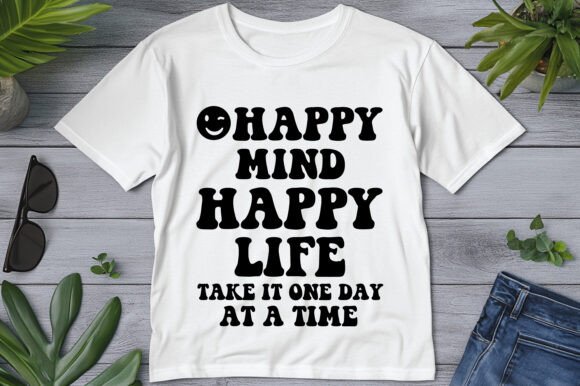
The first impression of this design is its calming, grounded mood. The phrase itself carries a gentle weight, perfect for the current cultural climate where mindfulness is highly valued. Visually, the layout feels balanced, likely utilizing a combination of script and sans-serif fonts to create visual interest without becoming chaotic. For an embroidery project, this balance is crucial. If the typography is too ornate, it becomes a nightmare to stitch out on textured fabrics. If it is too simple, it lacks the handmade charm customers expect from a handmade product. Based on the available file formats, including vector options like EPS and SVG, there is significant potential here for a skilled digitizer to convert this into a robust embroidery file that maintains its integrity across different hoop sizes.
Real-World Application: The Custom Tote Bag Scenario
To truly test the viability of this design, I imagined a specific real-life scenario: creating a line of custom tote bags for a local yoga studio. These bags needed to be durable, washable, and visually appealing enough to serve as walking advertisements for the brand. The Happy Mind Happy Life Take It One Day message fits this niche perfectly. However, translating a print-ready PNG or vector graphic into a stitched reality requires careful planning.
If I were to use this design on a canvas tote, I would need to consider the stitch density heavily. Canvas has a loose weave compared to broadcloth, and a dense fill stitch could cause the fabric to pucker or the thread to sink in, making the text illegible. In this context, the design might work best as an applique design or using a combination of satin stitch borders with lighter fill stitch interiors. This approach reduces the bulk while keeping the text crisp. For a sweatshirt embroidery project, the same logic applies but with added consideration for the fleece backing. The softness of the garment demands a design that doesn't feel like a stiff patch of plastic on the chest.
Navigating Fabric Textures and Hoop Limitations
One of the biggest challenges with typography-heavy designs is the scale. When you shrink a design to fit a small hoop size, such as a 4x4 inch frame for a baby onesie or a cap front, the tiny details in the lettering can disappear. The phrase "Take It One Day" contains several small words that could easily blend together if the thread colors do not provide enough contrast against the fabric texture.
For baby embroidery, safety and comfort are paramount. A design intended for adult apparel might need to be simplified for an infant's delicate skin. Thick, raised stitching can be irritating, so ensuring the back of the design is clean and covered with a soft backing is essential. Similarly, when working on curved surfaces like caps, the distortion factor comes into play. A straight line of text can look warped if not properly compensated during the digitizing phase. Since the original product description highlights print-ready files, an embroiderer must verify if the provided vectors are optimized for the curvature of a hat or if they require re-digitizing to prevent the text from looking like it is sliding off the brim.
Enhancing Value Through Professional Execution
The true value of a design like Happy Mind Happy Life Take It One Day lies not just in the artwork itself, but in how it elevates the perceived quality of the custom apparel or accessory it adorns. For an Etsy seller or small shop owner, consistency is key to building brand trust. If this design is used across a range of products—from pillow covers to kitchen towels—the stitching quality must remain uniform. A sloppy stitch-out on a holiday gift can ruin the sentiment of the message.
Using this design effectively can significantly boost buyer engagement. Customers are drawn to items that feel personal and thoughtful. A well-executed embroidered patch featuring this mantra can turn a plain denim jacket into a statement piece. The tactile nature of embroidery adds a layer of luxury that flat printing simply cannot match. When a customer runs their hand over the raised threads of a running stitch outline or a smooth satin column, they perceive higher value, which justifies a higher price point for your craft business.
Practical Notes for the Embroidery Professional
Before you commit to selling items made with this design or offering it as a digital asset, there are several practical steps you must take. First and foremost, always test the design on scrap fabric that matches your final material. What looks good on a screen might behave differently on a heathered cotton blend versus a solid polyester. Check the thread color contrast rigorously; sometimes a black transparent PNG suggests high contrast, but in thread form, certain shades of grey or navy might get lost on dark garments.
You must also verify the licensing terms. Just because a file is available as a digital embroidery file or graphic does not automatically grant commercial rights for unlimited sales. Confirm whether you can sell the physical finished product or if there are restrictions on the number of units. Additionally, inspect the small details of the vector files. Are the curves smooth? Are the closed shapes truly closed? These technical aspects determine whether your machine will run smoothly or stop frequently for thread breaks.
Finally, consider the end-user experience. Will this item be washed frequently? If so, ensure your stabilizer choice is appropriate to prevent the design from shifting or fraying after multiple cycles. For holiday embroidery gifts that might be stored away for months, durability is less critical than immediate visual impact, but for everyday wearables, longevity is non-negotiable.
In conclusion, Happy Mind Happy Life Take It One Day offers a versatile foundation for a variety of creative projects. Its strength lies in its universal message and adaptable layout. However, its success as an embroidery project depends entirely on the skill of the maker to translate those design assets into thread. By paying attention to fabric compatibility, stitch density, and finishing details, you can transform a simple graphic into a cherished keepsake that truly embodies the spirit of taking life one day at a time.